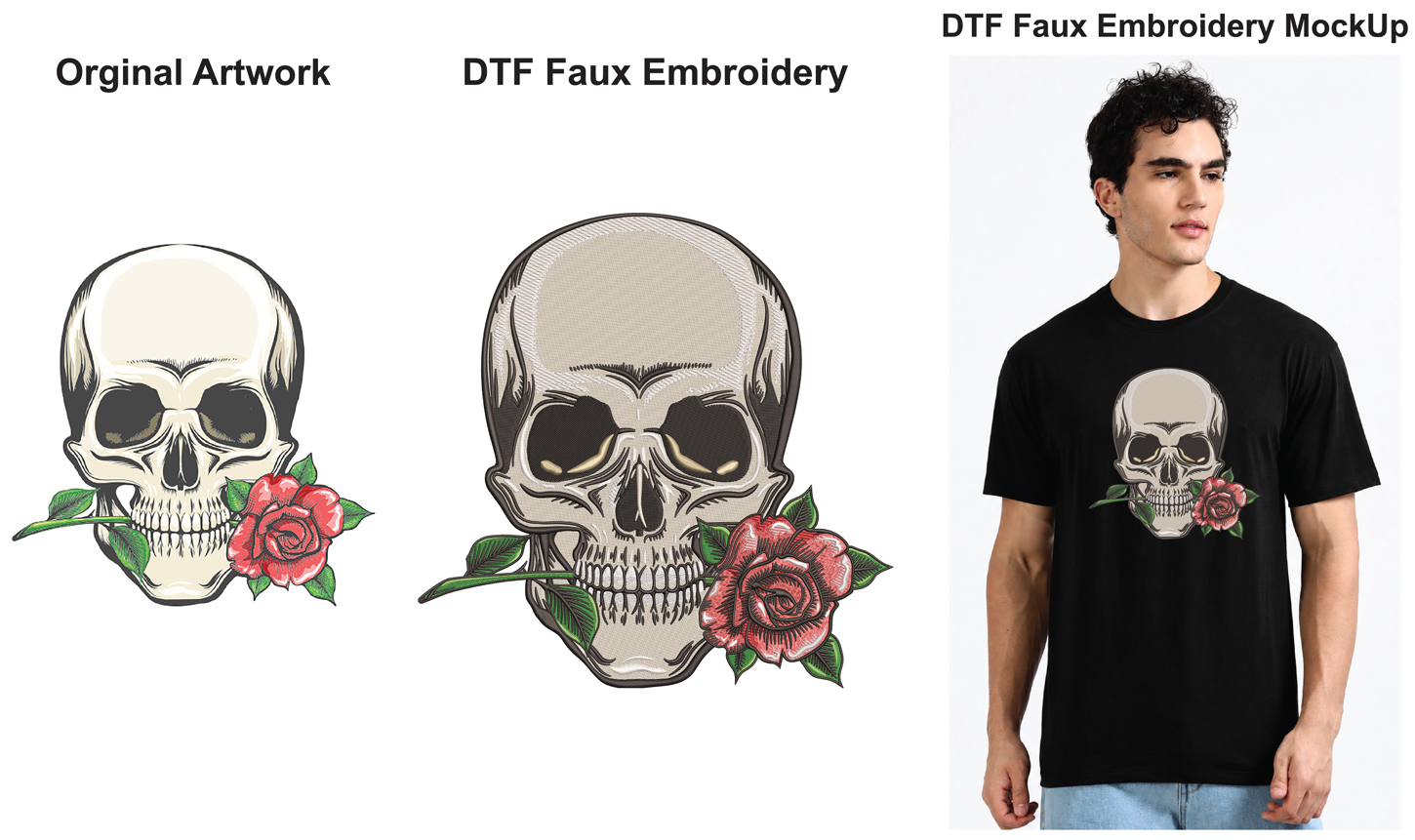
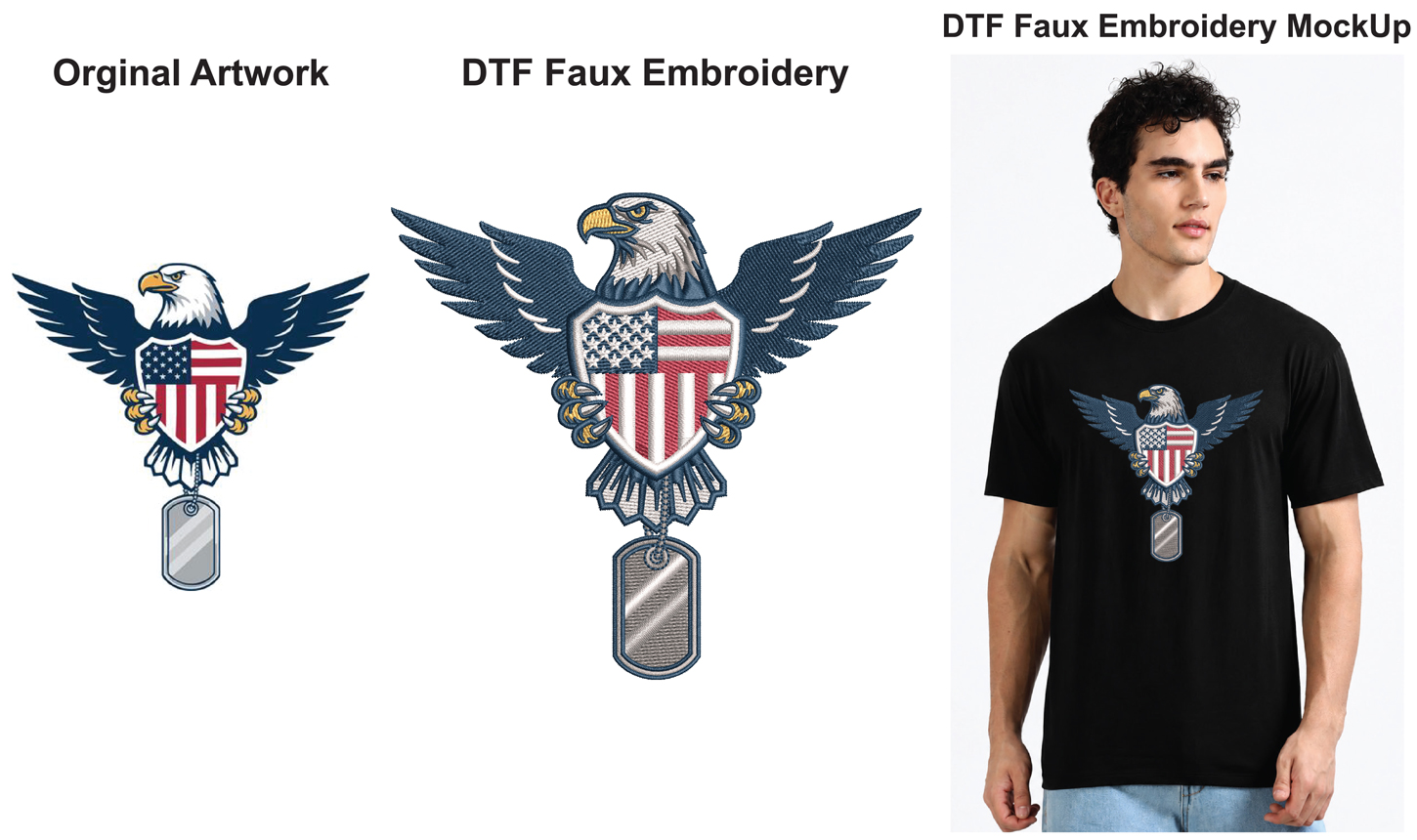
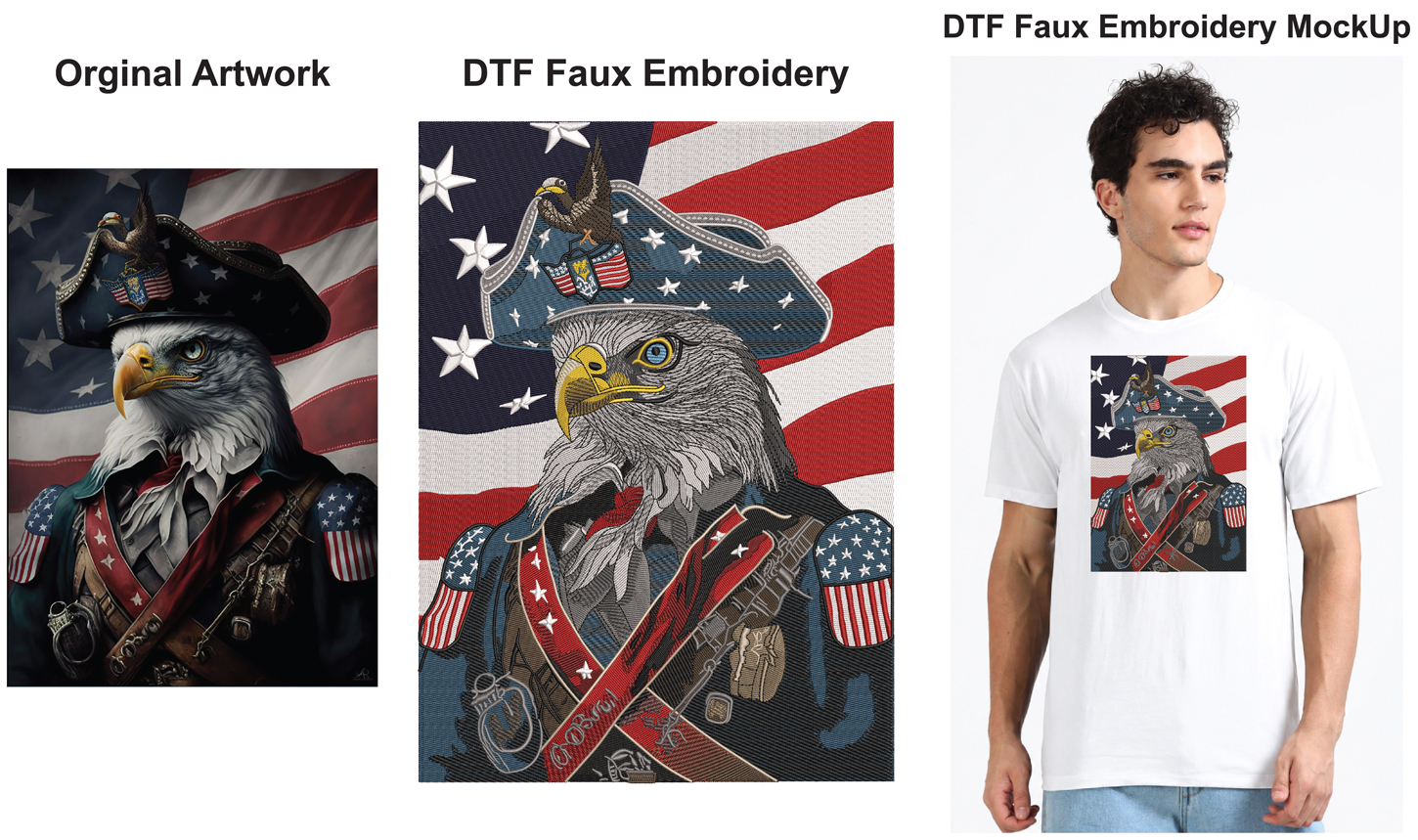
Faux Embroidery is a specialised Colourflex transfer process that recreates the look and feel of traditional embroidery — without the limitations of needle and thread.
Your supplied artwork is digitally “stitched” using advanced digitisation techniques that add texture, depth, and a realistic embroidered appearance. The result delivers the classic embroidered effect while offering greater flexibility for detailed designs, gradients, and small text that can be difficult with conventional embroidery.
And Faux embroidery (also called fake embroidery) is a design or technique that looks like real stitched embroidery but isn’t actually sewn with thread.
Instead of using needle and thread, the embroidered look is created using other methods, such as:
DTF (Direct-to-Film) printing is the powerful technology behind the growing trend of stitchless embroidery effects.
In the ever-evolving world of garment decoration, traditional embroidery is no longer the only way to achieve a rich, textured look on apparel. Thanks to advancements in printing technology, DTF (Direct-to-Film) printing has emerged as the driving force behind the growing trend of stitchless or faux embroidery.
This innovative technique combines the visual charm of embroidery with the flexibility and efficiency of digital printing—without using a single stitch.
Simple way to think of it
Real embroidery = actual thread stitched into fabric Faux embroidery = a visual illusion of stitching
What Is Stitchless Embroidery?
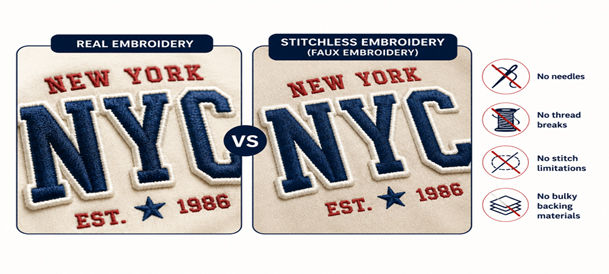
Stitchless embroidery, also known as faux embroidery, is a printing effect designed to mimic the appearance of real embroidered threads. Through carefully crafted textures, shadows, highlights, and layered artwork, a printed design can look surprisingly similar to traditional embroidery. Unlike actual embroidery, there are:
No needles
No thread breaks
No stitch limitations
No bulky backing materials
The result is a lightweight, highly detailed design that captures the premium feel of embroidery while maintaining the softness and flexibility of the fabric.
Advantages of DTF Faux Embroidery
1. No Stitch Count Limitations
Traditional embroidery pricing often depends on stitch count and design complexity. Faux embroidery eliminates these restrictions, allowing highly detailed artwork without additional production costs.
2. Better for Complex Designs
Small text, gradients, distressed effects, and photo-style elements are difficult—or sometimes impossible—with embroidery. DTF faux embroidery handles these elements with ease.
3. Faster Production
Since there is no digitizing for stitch paths or machine run time, production becomes significantly faster compared to traditional embroidery.
4. Lightweight and Comfortable
Heavy embroidery can make garments stiff and uncomfortable. Faux embroidery maintains a soft, breathable finish without extra weight.
Popular Applications
DTF faux embroidery is becoming increasingly popular for:
Streetwear brands
Fashion apparel
Sportswear
Promotional garments
Caps and hoodies
Vintage-inspired designs
Luxury logo effects
Many brands now use faux embroidery to achieve a premium embroidered appearance while keeping production flexible and affordable.